+1 (301) 610-3555
 +1 (301) 610-3555
 +91 70161 27118



The shift most businesses are underestimating
For the last two decades, software has shaped how businesses operate. Teams rely on platforms like Salesforce for managing pipelines, HubSpot for marketing workflows, and Slack for communication. This ecosystem, widely known as SaaS, has become the default way to run operations.
And it works, but only to a point. No matter how many tools you stack, work still depends on people to move it forward. You log in, check dashboards, trigger actions, and ensure nothing falls through the cracks. SaaS helped organize work, but it never truly executed it. That is where things are starting to shift.
What SaaS really is, and where it stops
SaaS, or Software-as-a-Service, is built around accessibility and structure. It gives businesses centralized platforms where data lives, processes are defined, and teams collaborate. At its best, SaaS acts as a system of record. It shows you what is happening across your business in real time and gives you control over workflows.
But SaaS has a built-in limitation. It does not act. It depends on someone to interpret the data, decide the next step, and execute it across systems. As operations grow more complex, this dependency becomes more visible and more costly.
What AI agents actually change
AI agents introduce a fundamentally different way of interacting with software. Instead of logging into tools and manually managing workflows, you define an objective and the system takes over execution. Whether it is following up with leads, shortlisting candidates, or responding to inbound inquiries, the agent can pull data, trigger workflows, send communication, and update systems across platforms without constant human input.
This is not just traditional automation. It is context-aware execution. AI agents do not just follow rules, they operate with intent, adapting to situations and completing tasks across systems.
The real difference between SaaS and AI agents
The shift becomes clearer when you look at how work gets done. SaaS is interaction-driven. It requires users to navigate interfaces, trigger processes, and manage outcomes manually. AI agents are execution-driven. They operate based on goals and handle the steps required to achieve those goals.
With SaaS, you remain deeply involved in every step of the process. With AI agents, your role shifts toward supervision. SaaS gives you control over systems, while AI agents focus on delivering outcomes from those systems. In simple terms, SaaS helps you manage work, while AI agents help you complete it.
Why SaaS alone is no longer enough
As businesses scale, SaaS begins to show its limits. Most organizations operate with multiple tools, CRM systems, communication platforms, analytics dashboards, and internal workflows. Each system works independently, but very few integrate seamlessly into a single execution layer.
The result is fragmentation. Teams switch between tools, repeat actions, and rely on manual coordination to keep operations running. Even with automation in place, there is almost always a human step involved, triggering workflows, verifying outputs, or correcting errors.
Despite having access to large amounts of data, progress still depends on someone taking action. SaaS provides visibility, but not execution, and that gap becomes more critical as complexity increases.
What this looks like in real business scenarios
Consider hiring. In a typical SaaS-driven workflow, recruiters search for candidates, evaluate profiles, send outreach emails, follow up, and update systems manually. Even with advanced tools, the process remains time-intensive and repetitive.
Now introduce an AI layer into that workflow. Candidate sourcing becomes continuous, screening happens automatically, outreach is immediate and personalized, and follow-ups are handled without delay. All of this is recorded in the system without manual updates. The workflow does not change, but the effort required to run it drops significantly.
The same shift applies to lead management. Instead of delayed responses and inconsistent follow-ups, AI agents can instantly engage leads, qualify them, schedule meetings, and maintain accurate records across systems. This is not an incremental improvement, it is a change in how work is executed.
The new software stack
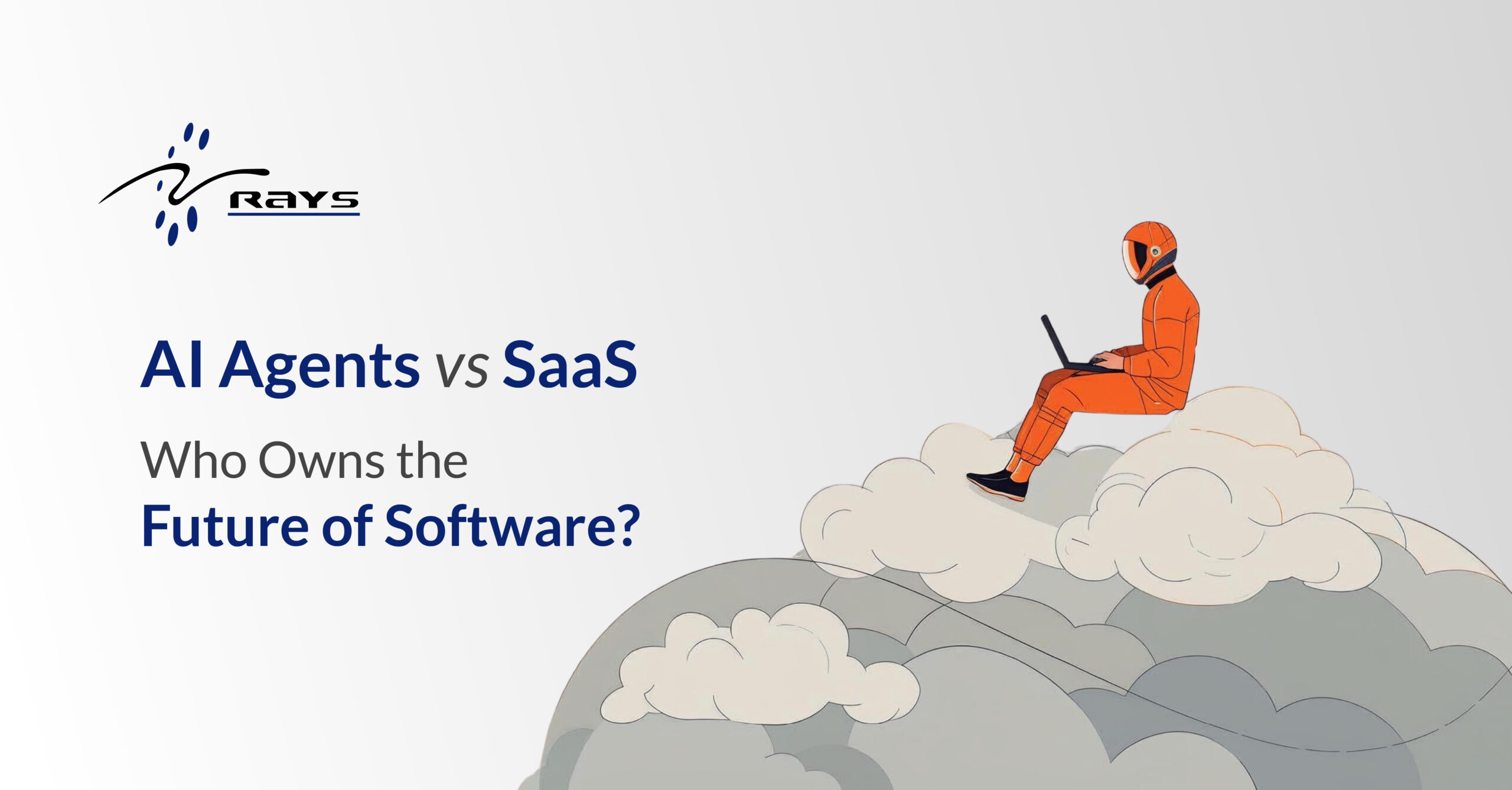
The future is not about replacing SaaS, but repositioning it. SaaS continues to serve as the foundation where data and capabilities exist, and that layer remains essential. What changes is the layer above it.
AI agents become the execution layer, deciding what actions to take and carrying them out across systems. In this structure, SaaS holds the data while AI drives the actions. SaaS becomes infrastructure, and AI becomes the operating layer.
The business model shift behind all of this
This transition is also changing how businesses evaluate software. Traditionally, SaaS pricing has been based on access, per user, per license, or per seat. The focus was on how many people could use the tool.
Now, the focus is shifting toward outcomes. Businesses are starting to evaluate software based on how much work gets done, how much time is saved, and how much manual effort is reduced. This shift from access-based pricing to outcome-based thinking will reshape how software is built, sold, and adopted.
So who actually owns the future?
It is not a simple SaaS versus AI debate. SaaS is not going away. It will continue to power data, workflows, and system capabilities.
However, control is shifting. The layer that executes work, not just displays it, will define the user experience. That layer is moving toward AI, and over time, that is where the real value will concentrate.
Where most companies will struggle
Many businesses will approach this transition cautiously. They will add AI features into existing tools, introduce small automations, and expect meaningful change. While this can improve efficiency, it does not fundamentally transform how work happens.
The real opportunity lies in redesigning workflows, moving away from tool-centric thinking toward system-driven execution. That shift requires a deeper approach and a clearer strategy.
Where Rays TechServ fits in
Most companies already have the tools they need. They have CRMs, platforms, and structured workflows in place. What they lack is a layer that connects everything and drives execution.
Rays TechServ focuses on building that layer. Instead of adding more tools, the approach is to design systems that sit on top of existing infrastructure and make it work together seamlessly.
This includes:
- Designing AI-driven workflows aligned with business goals
- Integrating across existing SaaS platforms
- Automating operations end-to-end
- Reducing manual effort while improving speed and accuracy
Whether it is recruitment, lead management, or internal operations, the goal is the same, turning systems into execution engines.
Final thought
The future of software is not about better tools. It is about fewer tools doing more work. Less time spent navigating systems, less reliance on manual processes, and more focus on outcomes.
SaaS made work visible. AI is making it executable.
And once that shift becomes clear, the direction forward becomes hard to ignore.